Google Advertisement
Texas, Oktober 24, 2026 – Tesla and Nvidia have committed a combined $2.8 billion to Samsung Electro-Mechanics, a strategic move that underscores the intensifying race to secure advanced semiconductor components essential for artificial intelligence.
The agreement, valued at 3.7 trillion won, will fund new production lines in Sejong, South Korea, dedicated to flip chip ball grid array (FC-BGA) substrates, a critical material for high-performance chip packaging.
According to industry sources, Nvidia will contribute the lion’s share of the investment 2.6 trillion won while Tesla will allocate 1.1 trillion won.
For Nvidia, the deal ensures long-term access to substrates needed for its AI GPUs, which dominate global data centers and generative AI applications.
Google Advertisement
Tesla’s participation reflects its ambition to strengthen supply chains for autonomous driving systems and AI-powered vehicle technologies.
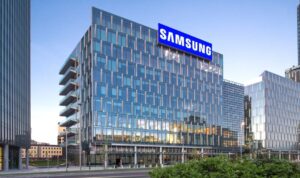
Samsung Electro-Mechanics, a subsidiary of Samsung Group, stands to benefit significantly from this infusion of capital.
The company will expand its production capacity, reinforcing South Korea’s role as a global hub for advanced semiconductor packaging.
The investment also highlights the growing importance of substrates, often overlooked compared to chips themselves, but increasingly recognized as a bottleneck in the AI hardware ecosystem.
The timing of the deal is notable. Demand for AI chips has surged worldwide, with supply chains strained by geopolitical tensions and limited manufacturing capacity.
By securing exclusive agreements, Tesla and Nvidia are insulating themselves from potential disruptions while ensuring priority access to critical components.
Analysts suggest this reflects a broader trend of vertical integration, where leading technology firms lock in supply to sustain growth.
Yet risks remain. Heavy reliance on Samsung could expose both companies to operational vulnerabilities if production falters
The capital intensity of the investment also underscores the high stakes of AI infrastructure, where billions are required to secure relatively narrow segments of the supply chain.
Moreover, South Korea’s position between U.S. and Chinese interests adds geopolitical sensitivity to the arrangement.
Despite these challenges, the outlook is clear: AI adoption is reshaping global capital flows, and hardware supply chains are becoming the defining battleground.
For Tesla, the deal secures chips vital to its autonomous driving ambitions. For Nvidia, it guarantees substrates to maintain GPU dominance.
For Samsung, it cements its role as a strategic supplier at the heart of AI’s industrial expansion.