Google Advertisement
Hanoi, September 15, 2026 – Tesla has formally entered Vietnam’s fast growing electric vehicle market with the establishment of Tesla Motors Vietnam LLC, a subsidiary registered in Ho Chi Minh City on September 11, 2026.
The unit carries charter capital of 77.667 billion dong, equivalent to about US$3 million, underscoring the company’s cautious yet strategic approach to Southeast Asia.
The new entity will oversee wholesale and retail sales of automobiles, vehicle parts, machinery, and equipment, while also managing import, export, and distribution operations.
Tesla appointed David Jon Feinstein, a U.S. national based in Austin, Texas, as chairman of the board.
Google Advertisement
Isabel Ching Fan was named general director, supported by Nguyen Manh Hung as assistant to the general director.
Vietnam’s EV market has become a magnet for global automakers.
Domestic champion VinFast, already exporting to the United States and Europe, enjoys strong government backing and brand recognition.
Chinese automakers such as BYD and SAIC are also aggressively expanding in Vietnam, offering competitively priced models.
Tesla’s entry adds a premium competitor to this crowded landscape.
Analysts note that the relatively modest US$3 million investment signals Tesla’s intent to test the market before committing to larger scale production or assembly.
Vietnam’s growing role in electronics and battery manufacturing could eventually support Tesla’s regional supply chain, making the country more than just a sales hub.
Government incentives, including tax breaks and infrastructure investment, have accelerated EV adoption.
Rising incomes and urbanization are fueling demand, with middle class consumers increasingly viewing electric cars as aspirational purchases.
Yet affordability remains a challenge, and Tesla’s premium positioning may limit its reach in a cost conscious market.
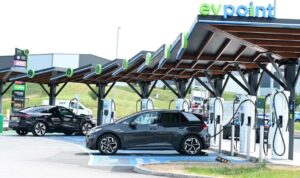
Infrastructure gaps also pose hurdles. Charging networks remain underdeveloped compared to China or Europe, raising questions about how quickly Vietnam can support widespread EV adoption.
Policymakers, however, are pushing hard to expand charging stations nationwide, creating opportunities for new entrants like Tesla.
Tesla’s arrival signals confidence in Vietnam’s trajectory as a regional EV powerhouse.
While VinFast and Chinese rivals will continue to dominate the mass market, Tesla’s brand strength and technological edge could carve out a niche among affluent buyers.
The company’s next steps whether deeper investment or local assembly will determine how far it can go in reshaping Vietnam’s automotive future.