Google Advertisement
Berlin, August 1, 2026 – BMW has reported a dramatic 35 percent drop in second-quarter profit, highlighting the mounting pressures on Germany’s auto industry as demand in China collapses and global competition intensifies.
Net profit fell to €1.2 billion, its weakest level since 2024, while pretax profit dropped to €1.7 billion, down 35 percent from a year earlier.
Revenue slipped nearly 8 percent to €31.3 billion, reflecting the sharp downturn in China, where vehicle deliveries plunged 30.2 percent.
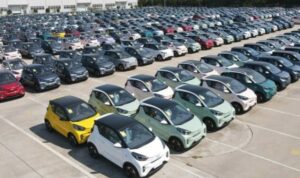
Once BMW’s most reliable growth engine, the Chinese market has become increasingly hostile as local electric vehicle makers undercut foreign brands with cheaper, tech-savvy models.
Google Advertisement
The company’s automotive EBIT margin narrowed to 2.3 percent, compared with 5.4 percent a year earlier, underscoring the squeeze on profitability.
Regional performance offered mixed signals. Deliveries in Europe rose 7.6 percent, buoyed by demand for premium combustion models, while sales in the United States climbed 11.9 percent.
Electric vehicle deliveries increased 5.2 percent to nearly 117,000 units, now accounting for one fifth of BMW’s global sales.
Yet this modest growth was insufficient to offset the collapse in China, where EV adoption is surging but foreign brands struggle to compete.
In response, BMW is embarking on a sweeping restructuring.
The company plans to cut 8,000 jobs in Germany by 2027 under a voluntary redundancy program.
Finance chief Walter Mertl emphasized the need to “reduce complexity” and lower costs, while new CEO Milan Nedeljkovic pledged to challenge long standing practices once considered “untouchable.”
The restructuring will target sales, procurement, and production, aiming to streamline operations and restore competitiveness.
BMW reaffirmed its forecast of an automotive margin between 1 and 3 percent for 2026, but warned of a “significant decrease” in profit compared with last year.
The company also faces geopolitical headwinds, including tariffs in the United States and disruptions linked to conflict in the Middle East, further weighing on its earnings outlook.
The struggles are not unique to BMW. German rivals Mercedes Benz and Volkswagen are also under pressure, with Mercedes offering voluntary redundancies and Volkswagen weighing job cuts that could reach 100,000 across its brands.
Together, these moves reflect the scale of the crisis confronting Europe’s auto industry as it grapples with the twin challenges of electrification and global competition.
BMW’s sharp profit decline signals more than a cyclical downturn.
It reflects a fundamental reordering of the global auto market, where Chinese EV makers are reshaping consumer expectations and eroding the dominance of traditional European brands.
For BMW, the path forward will require not only cost discipline but also a faster pivot toward electric mobility if it hopes to preserve its place in the premium segment.