Google Advertisement
Seoul, November 14, 2026 – South Korea collected 385 trillion won ($288.1 billion) in national tax revenue during the first nine months of 2026, marking a sharp increase as stronger corporate earnings and rising stock market activity bolstered government finances.
The figure represented an increase of 95.4 trillion won from the same period a year earlier, according to data released Thursday by the Ministry of Planning and Budget.
The increase highlights how an improving business environment, particularly in the semiconductor industry, has translated into a substantial windfall for public finances.
Corporate taxes accounted for the largest share of the increase.
Google Advertisement
Revenue from corporate income taxes climbed by 51.9 trillion won, reflecting improved profitability among domestic companies.
Technology manufacturers, including major semiconductor producers, have benefited from stronger demand and favorable conditions in global chip markets.
Personal income tax collections also increased, rising by 15.7 trillion won.
Higher performance bonuses paid to employees and a recovery in property transactions contributed to the growth, particularly through increased payroll and capital gains tax receipts.
The country’s expanding stock market provided another source of revenue.
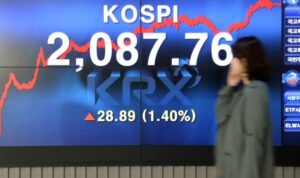
Securities transaction taxes rose by 7.5 trillion won as trading values increased, while the special tax for rural development gained 10.3 trillion won, supported by heavier transactions on the benchmark Korea Composite Stock Price Index, or Kospi.
The broader improvement in collections helped lift South Korea’s total government revenue to 605.4 trillion won through September, an increase of 124.6 trillion won from a year earlier.
Government expenditure reached 584.9 trillion won, up 40.7 trillion won, leaving a consolidated fiscal surplus of 20.4 trillion won.
The managed fiscal balance, which excludes social security funds and is considered a more stringent measure of the government’s underlying finances, recorded a deficit of 32 trillion won.
That was 70.5 trillion won narrower than the shortfall reported during the same period last year.
Still, the improvement does not eliminate concerns about the country’s longer-term fiscal position.
Central government debt stood at 1,369.4 trillion won at the end of September, underscoring the scale of its outstanding obligations.
For policymakers, the latest figures offer evidence that stronger corporate activity and financial markets can significantly strengthen tax receipts.
But sustaining that improvement will depend on whether business profits, investment and market activity remain resilient in the months ahead.