Google Advertisement
London, September 8, 2026 – Jaguar Land Rover (JLR), Britain’s largest carmaker, announced plans to cut 4,000 jobs globally over the next two years, a sweeping restructuring effort aimed at reducing costs and accelerating its transition toward electric vehicles.
The decision underscores the mounting pressures facing legacy automakers as they grapple with slowing demand, rising competition, and the costly pivot to electrification.
The cuts, which represent about 10 percent of JLR’s workforce, will fall heavily on its UK operations, where the company employs roughly 30,000 of its 40,000 staff worldwide.
Executives said the move is part of a £1.7 billion cost‑saving program designed to lower the company’s break even point to 300,000 vehicles annually.
Google Advertisement
Owned by India’s Tata Motors, JLR has struggled to maintain profitability amid volatile global markets and intensifying competition from electric vehicle makers such as Tesla and BYD.
The company’s leadership emphasized that while job reductions are painful, they are necessary to secure long‑term competitiveness.
Despite the cuts, JLR pledged to invest between £15 billion and £18 billion over the next five years in electrification, digital technologies, advanced manufacturing, and customer experience.
Five new models are scheduled for launch within the next 12 months, signaling the automaker’s determination to remain relevant in a rapidly shifting industry.
The announcement drew immediate political attention.
UK finance minister John Healey pointed to growth initiatives in Coventry, while business minister Jonathan Reynolds said he would meet JLR’s chief executive to discuss the implications of the cuts.
The government faces mounting pressure to balance industrial modernization with job protection, particularly in regions like the Midlands, where auto manufacturing remains a cornerstone of local economies.
Industry analysts noted that JLR’s move mirrors broader restructuring trends across Europe.
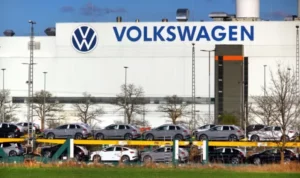
Volkswagen recently announced plans to cut 100,000 jobs by 2030, highlighting the scale of transformation underway as automakers race to meet climate targets and consumer demand for cleaner vehicles.
For workers, the cuts represent a significant blow, raising concerns about livelihoods and regional stability.
For JLR, however, the restructuring is framed as a strategic necessity a recalibration designed to ensure survival in an era defined by electrification and digital innovation.
As Britain’s auto sector braces for further upheaval, Jaguar Land Rover’s decision reflects both the risks and opportunities of industrial transition.
The company’s future will hinge on whether its investments in electrification can offset the immediate pain of job losses and position it as a credible competitor in the global EV market.