Google Advertisement
Beijing, June 16, 2026 – China’s latest economic data for May 2026 highlights a widening imbalance between household spending and industrial production, underscoring the challenges Beijing faces in stabilizing growth.
Retail sales contracted for the first time in more than three years, while factory output continued to climb, driven largely by exports and technology demand.
Retail Sales Slide
Retail sales fell 0.6 percent month-on-month in May, reversing April’s modest 0.2 percent gain.
Google Advertisement
This marks the first contraction since December 2022 and signals weakening consumer confidence.
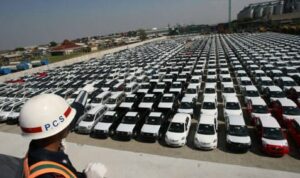
The decline was most evident in the automotive sector, where domestic car sales dropped for the eighth consecutive month, reflecting persistent caution among households.
Tourism spending also disappointed. Despite the five day Labor Day holiday, consumption was subdued, suggesting that government incentives such as trade-in programs are losing traction.
Economists note that households remain wary, constrained by declining property values and limited income growth.
Factories Push Ahead
In contrast, industrial production rose steadily, supported by stronger than expected exports and rising demand for advanced technologies, including artificial intelligence related products.
Manufacturing hubs benefited from global orders, particularly in electronics and machinery, helping offset domestic weakness.
This divergence illustrates China’s growing reliance on external markets.
While factories remain resilient, the imbalance raises concerns about sustainability, as global demand is vulnerable to trade tensions and geopolitical risks.
Investment and Property Woes
Fixed asset investment continued to weaken, dragged down by the prolonged property crisis.
Developers face tighter financing conditions, and housing sales remain sluggish, eroding household wealth and further dampening consumption.
The property downturn has become a structural drag, limiting Beijing’s ability to stimulate demand through traditional channels.
Two Speed Economy
China’s economy is increasingly two speed, external facing industries such as manufacturing and exports are expanding.
Domestic consumption is faltering, weighed down by household caution and property sector turmoil.
This imbalance complicates policymaking. Stimulus measures aimed at boosting consumption have had diminishing returns, while reliance on exports exposes China to external shocks.
Continued decline in housing markets undermines consumer confidence.
Government incentives are proving less effective in reviving spending.
Strong exports may cushion growth, but external risks remain high.
Economists warn that without a revival in domestic demand, China’s growth trajectory could remain uneven, undermining long term stability.
China’s May figures paint a picture of an economy struggling to balance external strength with internal weakness.
The challenge for policymakers will be to reignite consumer demand without over relying on exports a balancing act that will define the trajectory of the world’s second largest economy in the months ahead.