Google Advertisement
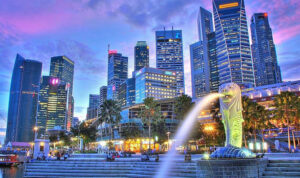
Singapore, November 10, 2026 – Apple paid US$3.25 billion in income taxes to Singapore in its 2026 financial year, underscoring the city state’s importance to the technology company as international efforts to curb low tax arrangements reshape corporate finances.
The payment, disclosed in Apple’s annual report for the year ended Sept. 26, represented 9.4 percent of the company’s worldwide cash income tax payments, totaling US$34.59 billion.
Singapore’s tax rates and incentives reduced Apple’s tax expense by US$5.49 billion compared with the 21 percent United States federal statutory rate.
That benefit was partly offset by a US$2.51 billion top up tax resulting from Singapore’s adoption of a 15 percent global minimum tax.
Google Advertisement
Announced in the government’s 2024 budget, the measure applies to financial years beginning on or after January 1, 2025, and is intended to ensure large multinationals pay a minimum effective rate.
Singapore’s standard corporate income tax rate is 17 percent, but incentives and exemptions can lower the effective burden.
Under the global rules, a top up levy applies when a company’s calculated effective rate falls below 15 percent. Apple did not disclose its precise Singapore rate.
After accounting for the top-up levy and US$311 million in other local tax adjustments, Singapore reduced Apple’s tax expense by a net US$2.67 billion against the American benchmark.
Its previous report did not separately disclose Singapore payments, preventing a year on year comparison.
Apple’s worldwide cash tax payments fell from US$43.37 billion a year earlier.
Its global business expanded: net profit climbed 18 percent to US$132.18 billion, while revenue rose 15 percent to US$478.83 billion.
The iPhone remained a growth engine. Sales increased 21 percent to US$254.1 billion, supported by demand for Pro models.
Services revenue grew 13 percent to US$123.3 billion. Sales in Greater China rebounded 28 percent after declining 4 percent in 2025.
Those gains came alongside rising expenses.
Apple’s research and development spending increased 32 percent to US$45.77 billion, reflecting infrastructure, artificial intelligence and staff costs.
Higher component prices, including memory, also weighed on results.
For Singapore, the disclosure highlights the challenge of attracting major technology investment while ensuring global companies pay a minimum tax for now.