Google Advertisement
New York, August 30, 2026 – Apple has set September 9, 2026, as the date for its next iPhone unveiling, marking the first major product launch under incoming CEO John Ternus.
The event, to be held at the Steve Jobs Theater in Cupertino, carries symbolic weight as Apple transitions leadership from Tim Cook to Ternus, who officially assumes the role on September 1.
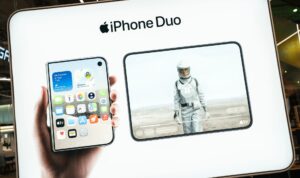
The company is expected to introduce the iPhone 18 Pro lineup and, for the first time, a foldable iPhone a move that could redefine Apple’s position in the premium smartphone market.
The iPhone remains Apple’s most critical product, accounting for roughly half of its revenue.
Google Advertisement
Analysts note that the September launch is not merely a showcase of new devices but a test of Apple’s ability to sustain growth amid intensifying competition and supply chain pressures.
The foldable iPhone, long rumored, is anticipated to feature a passport sized design that unfolds into a tablet like display, positioning Apple against Samsung, which has dominated the foldable segment.
Market researchers project Apple could ship 17 million foldable units by 2027, underscoring the device’s potential to drive margins and consumer excitement.
Alongside the foldable model, Apple will debut the iPhone 18 Pro and Pro Max, featuring faster processors, enhanced battery life, and significant camera upgrades, including a mechanical aperture on the larger model.
While the design changes are expected to be incremental, Apple’s strategy appears to hinge on staggering releases with standard iPhone 18 and iPhone Air models likely arriving later to smooth revenue cycles across quarters.
The event will also highlight Apple’s broader ecosystem.
Updates to the Apple Watch Series 12 and Apple Watch Ultra are anticipated, reinforcing Apple’s dominance in wearables.
More significantly, Apple is expected to unveil a revamped Siri powered by large language models, integrating artificial intelligence into messaging, scheduling, and daily tasks.
This move signals Apple’s intent to compete directly with AI driven assistants from rivals like Google and OpenAI.
Yet challenges loom. Apple has warned of “very significant” chip shortages that could constrain supply, raising concerns about meeting demand during the crucial holiday season.
Pricing remains another hurdle: foldable devices are costly, and Apple’s premium positioning may limit adoption in emerging markets.
Competitors in China and South Korea already offer foldables at lower price points, intensifying pressure on Apple to justify its premium.
For Ternus, the launch is both a debut and a test.
His leadership will be scrutinized not only for product innovation but also for how Apple navigates global economic headwinds, from inflationary pressures to shifting consumer spending.
The September event, streamed globally, will thus serve as a stage for Apple to reaffirm its role as a market leader while signaling how it intends to evolve under new stewardship.
At midnight on September 10 in Indonesia, audiences will tune in to see whether Apple’s promise to “Surprise and Shine” delivers more than incremental upgrades and whether Ternus can chart a course that balances innovation with resilience.